Home / Insights / Bakken Services Market
Bakken Services Market
Bakken oilfield services market 2026: demand by service line
Fewer rigs, longer laterals, a record number of producing wells and a price spike nobody planned for. Here is what the 2026 data says about where the work is in the Williston Basin, line by line, and what it means if you own a service company.
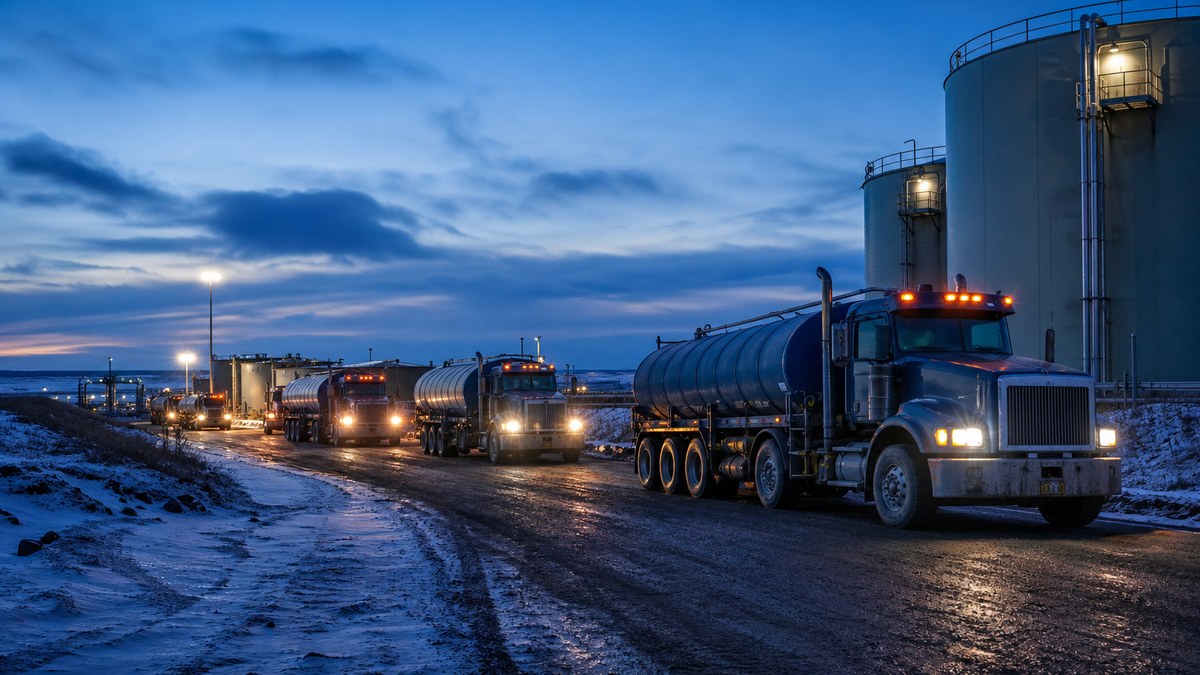
Short answer: The Bakken oilfield services market in 2026 is being pulled in two directions. Drilling and completion work is lean: North Dakota ran roughly 26 to 36 rigs and only 8 to 12 frac crews through the year, and some large operators are still cutting rigs. But production-side work keeps growing, because the state hit a record 20,177 producing wells in August 2026 and output ran about 1.16 million barrels a day. For service companies, that means steadier demand for water hauling, saltwater disposal, roustabout, hot oiling and well service, and choppier demand for anything tied to rig and frac counts.
- North Dakota produced 1,161,427 barrels per day in August 2026, 5.58% above the state's revenue forecast of 1.1 million bbl/d (DMR, reported Oct. 21, 2026).
- Producing wells reached a record 20,177 in August 2026, up from 20,072 in July (DMR via Dakotan, Oct. 20, 2026).
- Activity at the October 2026 briefing: about 31 rigs and 8 frac crews (Prairie Public). In June 2026 it was 26 rigs and 12 frac crews (DMR Director's Cut).
- Average completed lateral hit a preliminary record of 13,855 feet per well in Q2 2026, versus 10,141 feet in 2022 (DMR).
- About 60% of recent permits are for three-mile laterals; 301 four-mile permits have been issued (DMR, June 2026).
- EIA's October 2026 outlook puts Brent at $96.32 for 2026 and $83.74 for 2027, and expects prices to fall as Middle East supply recovers.
If you run a trucking, water, roustabout, hot oiling or well service company in the Williston Basin, 2026 has probably felt like two different years stacked on top of each other. The first half brought soft prices, cautious budgets and frac crews that came and went. The second half brought a geopolitical price spike, faster completions and a state production number that beat every official forecast. This guide sorts the noise from the signal for the Bakken oilfield services market, using the most recent public data, and breaks demand down by service line so you can see where your own business sits.
How big is Bakken activity in 2026?
Start with the numbers that actually drive service revenue: barrels, wells, rigs and frac crews.
According to the North Dakota Department of Mineral Resources (DMR), the state produced 36,004,228 barrels of oil in August 2026, or 1,161,427 barrels per day. That was up about 2.4% from July and 5.58% above the 1.1 million bbl/d the Legislature used for its revenue forecast, as reported by Prairie Public on October 21, 2026. Earlier in the year the picture was flatter: April 2026 averaged 1,137,155 bbl/d, slightly below forecast, according to the June 18, 2026 Director's Cut.
The more important number for service companies is the well count. North Dakota reached a record 20,177 producing wells in August 2026, according to DMR figures reported on October 20. Every producing well needs to be visited, pumped, treated, maintained and eventually worked over, and its water has to go somewhere. The count keeps setting records even in years when drilling slows.
| Indicator | Recent reading | Earlier reading | Source |
|---|---|---|---|
| Oil production | 1,161,427 bbl/d (Aug 2026) | 1,137,155 bbl/d (Apr 2026) | ND DMR |
| Producing wells | 20,177 (Aug 2026, record) | 20,072 (Jul 2026) | ND DMR |
| Drilling rigs | ~31 (Oct 2026 briefing) | 26 (Jun 2026); 28 (Nov 2025) | Prairie Public; DMR; Energy Reporters |
| Frac crews | 8 (Oct 2026 briefing) | 12 (Jun 2026); 10 (Nov 2025) | Prairie Public; DMR; Energy Reporters |
| Avg. completed lateral | 13,855 ft (Q2 2026, prelim.) | 10,141 ft (2022) | ND DMR |
| Gas production | 3.509 Bcf/d (Apr 2026) | 3.479 Bcf/d (Mar 2026) | ND DMR |
Rig counts vary by source and by day. One outlet reported 36 active rigs at the October briefing, against 34 in September, so treat any single number as a snapshot. The direction is what matters: activity is modestly higher than mid-year, but well below the levels many service companies built their fleets for a decade ago.
Why are fewer rigs producing more oil?
This is the central fact of the 2026 Bakken, and it changes the shape of service demand.
Laterals keep getting longer. DMR data show the average completed lateral rose from 10,141 feet in 2022 to 11,773 feet in 2025, then to a preliminary all-time high of 13,855 feet in the second quarter of 2026. DMR director Nathan Anderson told KFYR in October 2026 that laterals are about 2,800 feet longer than three years ago. By June 2026 the state had issued 1,420 three-mile permits and 301 four-mile permits, and roughly 60% of the permit mix was three-mile wells.
Cycle times are also shrinking. DMR geologist Richard Suggs said at the October briefing that operators have cut the time from drilling to bringing a well online by roughly half since the start of the year, according to Dakotan's report. Fewer rigs and crews can now deliver the same or more production.
Large operators are leaning into that efficiency. KFYR reported on October 15, 2026 that Chevron plans to go from three Bakken rigs to two in December, after cutting from four to three late last year. Anderson noted that other companies have picked up rigs in the state, and that operators are moving into areas such as Burke, Divide, northern Williams and northern Billings counties.
Longer laterals are a quiet transfer of work from drilling-side services to production-side services. Fewer, bigger wells mean fewer rig moves and fewer frac jobs per barrel. But each well carries more fluid, more equipment on the pad and more years of maintenance. The companies that will feel this most are the ones whose revenue is mostly tied to new wells. The ones tied to the producing base should feel it least.
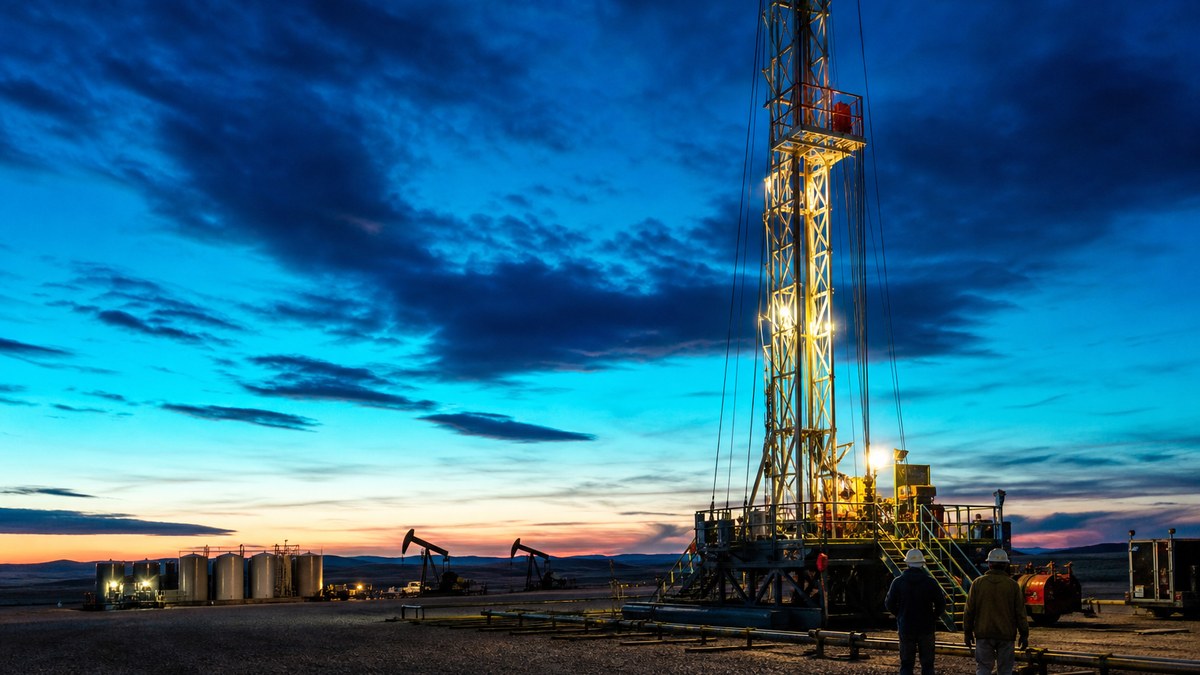
Which service lines are in demand in 2026?
A useful way to look at the Bakken oilfield services market is to group work by what drives it. Some work follows the rig count, some follows frac crews, and some follows the producing well count and production volumes. The table below is WXE's qualitative reading of the 2026 data. It is not a forecast, and conditions differ by county, customer and contract.
| Service line | Main demand driver | 2026 direction (WXE reading) |
|---|---|---|
| Rig moving, drilling support, rental for drilling | Rig count | Lean and lumpy; exposed to large-operator rig cuts |
| Frac support: sand and fresh-water hauling, frac tanks, flowback | Frac crews, completions | Volatile; fewer crews, but bigger jobs per well |
| Produced water hauling | Producing wells, water volumes, pipeline coverage | Steady, but pressure from water pipelines in core areas |
| Saltwater disposal (SWD) | Produced water volumes | Steady to growing with production; capacity and location matter |
| Roustabout, construction, pad maintenance | Producing wells, new pads, facilities | Steady; more equipment per pad |
| Hot oiling, chemical, paraffin treatment | Producing wells, winter | Steady with strong seasonality |
| Workover and well service rigs, artificial lift | Aging well base, lift conversions | Supported by a record well count |
| Crude and condensate trucking | Production, gathering coverage | Shrinking share where pipelines reach |
Drilling-linked services
Any business that makes its money when a rig moves or spuds is working in a smaller pool than in past cycles. In 2026 the state ran somewhere between 25 and 36 rigs depending on the month, and the largest operator in the basin is still trimming. Efficiency gains mean each rig also drills more footage per year. For rig movers and drilling rental companies, the risk is concentration: losing one operator's program can take out a large share of revenue.
Completion-linked services
Frac crew counts swung from 13 in October 2025 to 10 in November 2025, 12 in June 2026 and 8 at the October 2026 briefing. Anderson attributed the late-2025 drop partly to lower commodity prices. For sand haulers, frac water haulers, frac tank rental and flowback crews, that kind of swing is the whole story of the year. Longer laterals push the other way. Each completion now uses more water, more sand and more days of flowback. As far back as 2018, RBN Energy noted that a typical Bakken completion needed 200,000 barrels of water or more, eight to ten times the volume of early shale-era wells. Laterals have grown a lot since then.
Production-linked services
This is where the Bakken's 20,000-plus wells do the work. Producing wells need roustabout crews, chemical and hot oil service (especially through a North Dakota winter), equipment repair, lift changes and periodic workovers. That demand does not stop when a rig is released. It also grows with the size of the producing base, which has kept setting records even as drilling has slowed.
What's happening to water hauling and saltwater disposal?
Water is the Bakken's largest by-product and one of its most important service markets. In 2018, RBN Energy estimated the region was already generating more than 1 million barrels a day of produced water. A peer-reviewed study (Horner et al., 2016) found that first-year wastewater per Bakken well rose from about 1.1 million gallons in 2008 to about 2.9 million gallons in 2012, and that wastewater volumes exceeded fracturing water use. Production and well counts have grown substantially since those studies. The state does not publish a single headline produced-water number in its monthly briefing, so owners should treat older totals as a floor, not a current figure.
Two forces shape this market:
- Pipelines are taking share in the core. Water gathering systems now reach many high-density areas. One midstream operator, Tallgrass, lists 174 miles of produced-water gathering pipeline, 25 disposal wells and 401,100 barrels per day of disposal capacity in North Dakota on its website. Every barrel that moves by pipe is a barrel not hauled by truck.
- Trucks still matter at the edges. Operators are drilling more in fringe areas like Burke, Divide and northern Billings counties, where gathering coverage is thinner. Trucks also cover new pads before pipe arrives, peak volumes, flowback, upsets and remote wells.
For SWD owners, the drivers are location, permitted capacity, pipeline connections and compliance history. For water haulers, they are which operators you serve, how close your work sits to pipeline networks, and how quickly you can respond when the pipe can't. We will cover Bakken produced water in more depth in a future WXE insight.
Imagine a water hauling company with $10 million of annual revenue: $4 million from completion and flowback water, $6 million from produced-water hauling for producing wells.
- If completions fall 25% and producing-well work stays flat, revenue drops to about $9.0 million (a 10% decline).
- If a customer then connects half of the company's produced-water wells to a gathering pipeline, produced-water revenue falls to $3.0 million and total revenue to about $6.0 million.
The same company, with the same trucks, looks very different depending on what drives its work. That is why buyers ask for revenue by customer, by service line and by type of work, not just total revenue.
How do oil prices change service demand in 2026?
Price affected 2026 more than almost any operational factor. In June 2026, DMR's revenue forecast assumed $59 oil, while North Dakota's market price had already been $92.91 in April. By August the realized ND price was $76.14 per barrel, 33.6% above the revenue forecast, according to Prairie Public.
The swing was driven by events far from the Bakken. In its October 6, 2026 Short-Term Energy Outlook, as reported by Rigzone, the U.S. Energy Information Administration said attacks on Saudi Arabia's East-West pipeline pushed Brent spot as high as $131 a barrel on September 15. EIA now forecasts Brent averaging $96.32 in 2026, peaking around $105 in the fourth quarter, then falling to about $74 by late 2027 as Middle East supply recovers.
For service companies, that forecast curve matters more than today's price. Bakken operators typically plan capital budgets on expected prices, not spot spikes. DMR officials said in October that operators have been bringing completed wells online faster as prices rose. But a forecast that shows prices falling through 2027 is not one that usually triggers a big wave of new rigs. Expect operators to keep favoring production work, well optimization and capital discipline over a drilling boom.
A price spike helps service companies most through the producing base: more workovers that now pencil out, inactive wells returned to production, faster completions of already-drilled wells. It helps least through new rigs, because operators know the forecast says prices fall again. If you own a production-side business, 2026 is likely to look better on your books than the rig count suggests. If you own a drilling-side business, it may look worse.
What does gas and pipeline growth mean for service companies?
North Dakota produced about 3.5 billion cubic feet of gas per day in April 2026, with a statewide gas capture rate of 95.5% (DMR). Capture had reached 96% by the October briefing (Prairie Public). New takeaway is coming. DMR lists WBI's Bakken East project with Phase 1 targeting November 2029 and Phase 2 November 2030, and the Intensity project targeting July 2029 and January 2030. Midstream expansion creates construction and maintenance work, including right-of-way, compressor stations and facility roustabout. It also reduces flaring and gives operators more reason to keep wells producing. For details on the pipeline itself, see Raptor Energy Partners' guide to the Bakken East pipeline.
What does this market mean for owners of Bakken service companies?
For an owner, the market data turns into a few practical questions about your own business:
- What drives your revenue? Split last year's revenue by rig-linked, completion-linked and production-linked work. Buyers, lenders and your own planning all need this view.
- How concentrated are you? If one operator is more than about a third of revenue, a single rig cut can reshape your year. In 2026 even the basin's largest producer reduced rigs.
- Where is the pipe going? Map your water and crude hauling against gathering systems. Work at the edge of pipeline coverage is valuable today and at risk tomorrow.
- How old is your fleet? Fewer, longer, higher-volume jobs reward reliable equipment and good dispatch. They punish downtime.
- How do you handle winter? Hot oiling and chemical work peak in the cold months. Trucking and construction often slow down.
None of these questions requires selling your company. But they are the same questions a buyer will ask, and answering them early tends to improve both your operations and your options. Our guide to what your oilfield service company is worth explains how service mix and customer concentration affect value. The 12-month plan to prepare your company for sale shows how to organize this information.
The Bakken is a mature basin with a record well count, longer laterals and disciplined operators. That favors service companies that are steady, safe and well run over companies built for rapid growth. It also explains why a fragmented market of small, owner-run firms is consolidating: shared dispatch, safety programs, purchasing and back office matter more when the work is steady and margins are earned by efficiency rather than by volume.
Own a Bakken oilfield service company?
Whether you're thinking about succession, a sale or just want an outside view of how your business fits the 2026 market, a confidential conversation costs nothing and commits you to nothing. Your information stays private.
Start a confidential conversation
Or email operations@worldxenergy.com
Frequently asked questions
Is the Bakken oilfield services market growing in 2026?
It depends on the service line. Production reached about 1.16 million barrels per day in August 2026 and producing wells hit a record 20,177, which supports production-side services. Rig and frac crew counts stayed modest, so drilling and completion services did not grow at the same pace.
How many rigs and frac crews are working in North Dakota?
At the October 2026 DMR briefing, about 31 rigs and 8 frac crews were reported, although another outlet reported 36 rigs. In June 2026 the state had 26 rigs and 12 frac crews. Counts change week to week, so check the latest DMR Director's Cut.
Why is production rising while rig counts stay low?
Operators are drilling longer laterals and bringing wells online faster. The average completed lateral reached a preliminary 13,855 feet in Q2 2026, up from 10,141 feet in 2022, and DMR says the time from drilling to production has been cut roughly in half since early 2026.
Which Bakken service lines are most stable?
Services tied to producing wells tend to be the most stable: produced-water hauling and disposal, roustabout and pad maintenance, hot oiling and chemical treatment, and workover or well service. They depend on the size of the producing base rather than on new drilling.
Are water pipelines hurting Bakken water haulers?
In core areas with gathering systems, pipelines move a growing share of produced water that trucks used to haul. Trucks remain important for new pads, fringe acreage, flowback, peak volumes and remote wells. A hauler's exposure depends on where its customers' wells are relative to pipeline coverage.
Will high 2026 oil prices bring a drilling boom?
Not necessarily. EIA's October 2026 outlook expects Brent to fall from about $105 in late 2026 to roughly $74 by late 2027 as Middle East supply recovers. Operators usually plan on expected prices, so the spike has mainly sped up completions and production work rather than adding many rigs.
What does the Bakken East pipeline mean for service companies?
New gas takeaway projects, with first phases targeted for 2029, create construction and facility maintenance work. They also reduce flaring constraints and support continued production, which helps production-side service demand over time.
How does service mix affect what my company is worth?
Buyers look at how predictable revenue is. Production-linked revenue spread across several operators is usually viewed as steadier than revenue concentrated in drilling or completion work for one customer. Your CPA and an experienced M&A adviser can help you understand how this applies to your company.
Where can I find official Bakken production data?
The North Dakota Department of Mineral Resources publishes a monthly Director's Cut with production, well counts, rigs, frac crews, gas capture and permit data. The U.S. Energy Information Administration publishes the monthly Short-Term Energy Outlook with price and production forecasts.
Related insights
Sources
- Prairie Public, "North Dakota oil production, price continue to outpace forecasts," Oct. 21, 2026 (DMR August 2026 data). news.prairiepublic.org
- Dakotan, "North Dakota reaches record 20,177 producing oil wells as higher prices drive activity," Oct. 20, 2026. mydakotan.com
- North Dakota Department of Mineral Resources, Director's Cut, June 18, 2026 (April 2026 data, laterals, permits, pipelines). dmr.nd.gov
- KFYR-TV, "Fewer rigs, more oil: North Dakota's Bakken production outlook," Oct. 15, 2026. kfyrtv.com
- Rigzone, "EIA boosts oil price forecast by $5 in 2026, $10 in 2027," Oct. 8, 2026 (EIA STEO, Oct. 6, 2026). rigzone.com
- Energy Reporters, "North Dakota frac crew decline to 10," Nov. 24, 2025. energy-reporters.com
- RBN Energy, "Let me move you: the Bakken's still-growing water midstream sector," Apr. 9, 2018. rbnenergy.com
- Horner, R. M. et al., "Water use and management in the Bakken shale oil play in North Dakota," 2016. stanford.edu
- Tallgrass, North Dakota water solutions (company website, accessed Oct. 2026). tallgrasswater.com
This article is general information for owners of oilfield service businesses and is not legal, tax, accounting or investment advice. Market data is drawn from the public sources listed above as of the dates shown and may change; WXE Energy Partners does not guarantee its accuracy or completeness. Talk to your CPA, attorney and other qualified advisers before making decisions about your business. Nothing on this site is an offer to sell or a solicitation of an offer to buy any security.